
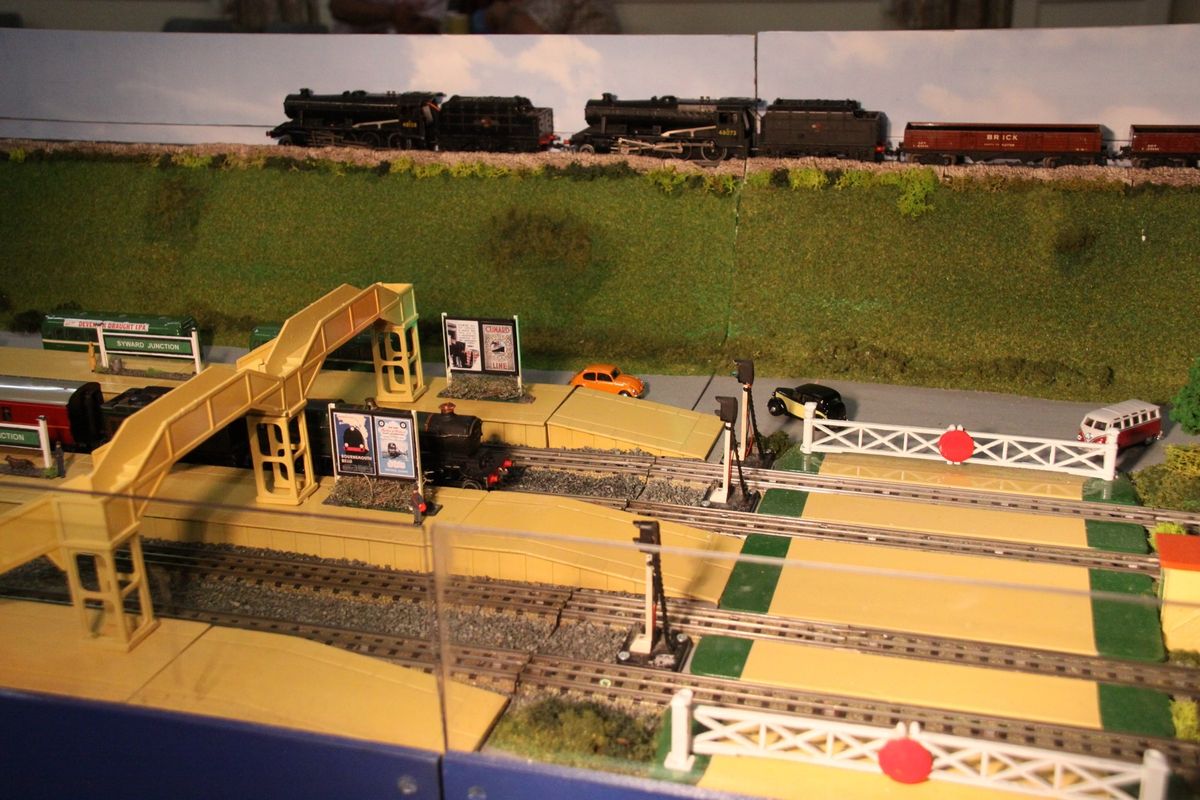
Hornby 3-Rail Track: A Guide to a Classic Model Railway System
Hornby 3-rail track is part of the history of British model railways. It was used in several generations of Hornby trains, including Hornby Dublo OO gauge and older tinplate models. Although two-rail track is now the familiar standard, three-rail systems remain popular with collectors and enthusiasts who enjoy running vintage locomotives.
How does 3-rail track work?
As its name suggests, three-rail track has three electrical conductors: the two outer running rails and a third conductor positioned between them. In many Hornby systems, the locomotive takes power from the central rail through a pickup beneath the engine, while the outer rails complete the electrical circuit. This arrangement allows both running rails to serve as one side of the circuit.
The precise design varies between Hornby ranges and periods. Hornby Dublo 3-rail OO track, for example, uses a central conductor made up of metal studs. Other vintage Hornby track systems may look similar but differ in scale, rail profile, electrical arrangement or connection method.
Hornby Dublo 3-rail OO
Hornby Dublo’s 3-rail system was introduced in the 1930s and became a familiar sight in British homes. Its OO gauge trains ran on metal track with a central row of studs, and the range included locomotives, coaches, wagons and accessories. The system’s distinctive appearance is part of its appeal today.
Hornby Dublo also produced a two-rail system. The two versions are not simply interchangeable: locomotives and track need to match the correct electrical system. Before buying second-hand equipment, check whether it is marked or described as 3-rail or 2-rail.
Advantages and considerations
For vintage railway fans, 3-rail track offers authenticity and a way to operate locomotives as they were originally designed. It can also be an accessible route into collecting, as second-hand track and trains are often available through specialist dealers, model railway fairs and online marketplaces.
There are practical points to consider. The central studs are visible between the rails, so the track has a different appearance from modern two-rail systems. Track condition also matters: dirt, corrosion, loose connections or worn locomotive pickups can cause unreliable running. Older equipment may need careful inspection and maintenance before use.
Setting up and maintaining a layout
- Check compatibility: Confirm the gauge and electrical system of every locomotive and track section.
- Inspect the track: Look for bent rails, damaged sleepers, missing studs and poor rail joints.
- Clean contact surfaces: Remove dirt and oxidation gently, following advice appropriate to the particular track and locomotive.
- Test the power supply: Use a controller suitable for the equipment, and check wiring before running trains.
- Start with a simple circuit: A basic oval makes it easier to identify electrical or mechanical problems.
Because vintage products can vary, it is wise to consult the relevant instruction leaflet or a knowledgeable Hornby specialist when dealing with unfamiliar equipment. Take particular care with older transformers and wiring, and do not use damaged electrical equipment.
Can Hornby 3-rail track be converted to two-rail?
Conversion is possible in some cases, but it is not usually a matter of changing the track alone. A 3-rail locomotive collects current through a central pickup and has electrical connections designed for that system. A two-rail locomotive instead draws power from the two outer rails, so conversion may involve changes to the pickup, motor wiring and insulation. Track sections may also need modification or replacement.
For many owners, keeping a 3-rail layout in its original form is the simplest way to enjoy compatible vintage trains. Others prefer a carefully planned conversion. The best choice depends on the condition of the equipment, the intended layout and whether preserving originality is important.
A lasting part of model railway history
Hornby 3-rail track represents an important chapter in the development of model railways in Britain. Its unusual central conductor, robust vintage trains and nostalgic character continue to attract collectors and operators. With compatible equipment, a clean track and a suitable power supply, this classic system can still provide many hours of enjoyment.
5 Essential Tips for Using and Caring for Hornby Dublo 3-Rail Track
- Use only Hornby Dublo 3-rail locomotives on compatible track.
- Clean the centre rail and running rails regularly.
- Check track joints are firmly connected for reliable power.
- Keep metal objects clear to avoid short circuits.
- Store vintage track dry to help prevent rust.
Use only Hornby Dublo 3-rail locomotives on compatible track.
Use only Hornby Dublo 3-rail locomotives on track designed for the Hornby Dublo 3-rail system. These locomotives collect power through the centre studs, so they are not directly compatible with two-rail track or other systems that use a different electrical arrangement. Check the locomotive and track specifications before connecting a controller or running a train to help prevent poor performance or damage.
Clean the centre rail and running rails regularly.
Clean the centre rail and running rails regularly to help maintain reliable electrical contact and smooth running. Dust, dirt and oxidation can interrupt the connection between the track and locomotive, causing hesitation or stalling. Use a soft, lint-free cloth and a track cleaner suitable for your Hornby equipment, and avoid abrasive materials that could damage the rails or centre studs.
Check track joints are firmly connected for reliable power.
Check that every track joint is firmly connected to help maintain a reliable flow of power around your Hornby 3-rail layout. Loose or poorly aligned joints can interrupt electrical contact, causing trains to slow down, stutter or stop. Make sure the rails meet neatly and the connectors are secure, taking care not to force or bend the track.
Keep metal objects clear to avoid short circuits.
Keep metal objects, such as tools, loose screws and coins, clear of Hornby 3-rail track. If an object touches the centre conductor and either outer rail, it can cause a short circuit, potentially interrupting the power supply or damaging equipment. Check the track is clear before switching on, and store small metal parts away from the layout.
Store vintage track dry to help prevent rust.
Store vintage Hornby 3-rail track in a cool, dry place to help prevent rust and corrosion. Before putting it away, make sure the track is clean and completely dry, then keep it in a sealed box or protective wrapping. Avoid damp sheds, garages and lofts where moisture and changing temperatures can damage the rails and affect electrical contact.