
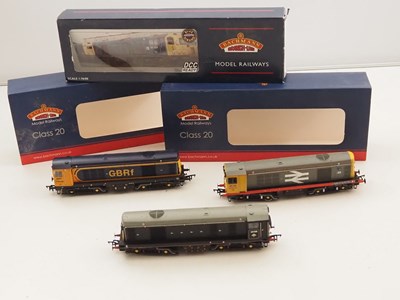
00 Gauge Diesel Locomotives: A Guide for Model Railway Enthusiasts
00 gauge diesel locomotives are among the most popular subjects for British model railway layouts. They offer a huge range of prototypes, from early post-war diesel shunters to powerful modern freight and passenger locomotives. Whether you are building a historically accurate railway or simply choosing a model that catches your eye, there is a 00 gauge diesel to suit almost every layout and budget.
What Does 00 Gauge Mean?
In the UK, 00 gauge models are generally built to a scale of 4 mm to 1 foot, or approximately 1:76.2. They run on track with a gauge of 16.5 mm. This track gauge is narrower than the scale equivalent, but it has become the established standard for British 00 gauge modelling.
The term “gauge” refers to the distance between the rails, while “scale” describes the size of the model in relation to the real locomotive. The distinction is useful when comparing 00 gauge with other model railway systems, such as N gauge or 0 gauge.
A Wide Variety of Locomotives
Diesel traction transformed Britain’s railways during the second half of the twentieth century. This change is reflected in the variety of models available to collectors and railway modellers.
- Diesel shunters, such as the Class 08, are compact locomotives designed for moving wagons around goods yards and depots.
- First-generation diesels, including locomotives such as the Class 20 and Class 24, capture the transition from steam to diesel power.
- Express passenger locomotives, such as the Class 55 “Deltic”, are known for their distinctive appearance and high-speed passenger services.
- Modern main-line locomotives, including the Class 66, are frequently seen hauling freight trains across Britain.
- Diesel multiple units provide another option for passenger layouts, with models ranging from classic first-generation units to contemporary trains.
Many locomotives have appeared in several liveries over their working lives. A single class might be modelled in the colours of British Rail, a regional passenger operator, a freight company or a heritage railway. Choosing a livery that matches the period and location of a layout can add a convincing sense of place.
Choosing a Model
Before buying a locomotive, consider how it will fit into your layout. Check the model’s length and running requirements, particularly if your railway has tight curves. Some larger locomotives need broader curves to run reliably and look their best.
It is also worth considering the locomotive’s intended use. A shunter is well suited to a compact goods yard, while a main-line diesel may need a longer train and more open running space. If you are modelling a particular railway or era, compare the locomotive’s class, livery and details with your chosen setting.
Models vary in detail and features. Entry-level locomotives can be a practical choice for a first layout, while more detailed versions may include separately fitted parts, illuminated headlamps and finer bodywork. Reviews and manufacturer specifications can help you compare options before purchasing.
Analogue and DCC Operation
Many 00 gauge locomotives are available for conventional analogue control, while others are designed to work with Digital Command Control (DCC). DCC allows a modeller to control individual locomotives on the same powered track and may provide features such as sound, lighting control and more finely tuned speed settings.
Some models are supplied with a DCC decoder already fitted; others have a socket for one to be added. Sound-equipped locomotives can make a layout more immersive, but they may cost more and require suitable control equipment. Always check that a locomotive is compatible with the system used on your railway.
Keeping Locomotives Running Smoothly
Reliable running depends on clean track, sound electrical connections and sensible handling. Dust and dirt can interfere with a locomotive’s pick-ups and wheels, so regular track cleaning is important. Follow the manufacturer’s guidance for cleaning and lubrication, and avoid applying oil where it is not required.
New models benefit from being run in according to the instructions supplied with them. If a locomotive hesitates or runs unevenly, check the track and wheels before investigating the mechanism. Careful maintenance can help preserve both performance and appearance.
A Locomotive for Every Layout
From a small shunter working a compact yard to a powerful diesel hauling a long freight train, 00 gauge locomotives bring movement and character to a model railway. Their variety makes it possible to recreate many different periods and railway settings, while offering plenty of scope for collecting, detailing and operation.
For beginners and experienced modellers alike, choosing a locomotive is an opportunity to shape the story of a layout. With a little research into scale, era, livery and operating requirements, a 00 gauge diesel can become the centrepiece of a railway for years to come.
8 Essential Tips for Buying and Running OO Gauge Diesel Locomotives
- Check the track gauge and scale before buying.
- Match the locomotive’s era to your layout.
- Choose DCC-ready models for easier upgrades.
- Keep wheels and track clean for reliable running.
- Use the correct coupling type for your stock.
- Run in new locomotives gently at low speed.
- Store models in a dry, dust-free place.
- Check minimum curve radius before purchasing.
Check the track gauge and scale before buying.
Before buying a 00 gauge diesel locomotive, check both the track gauge and the model’s scale. “Gauge” describes the distance between the rails, while “scale” indicates how large the model is compared with the real locomotive. Although 00 gauge models are typically made to a scale of 4 mm to 1 foot and run on 16.5 mm track, other model railway systems may use different measurements. Confirming compatibility helps ensure your new locomotive will run on your existing layout.
Match the locomotive’s era to your layout.
Match your 00 gauge diesel locomotive to the era of your layout to create a more convincing scene. Check when the locomotive entered service and which liveries it carried, then compare these details with your buildings, rolling stock and trackside equipment. A modern Class 66, for example, may look out of place on a railway set in the 1960s, while an early diesel could feel less at home on a contemporary layout.
Choose DCC-ready models for easier upgrades.
When choosing a 00 gauge diesel locomotive, look for a DCC-ready model if you may want to upgrade it later. These models usually include a socket for a digital decoder, making installation simpler than converting a locomotive that was not designed for DCC. You can begin with conventional analogue control and add features such as independent locomotive control, sound or lighting functions when you are ready. Check the manufacturer’s specifications to confirm which decoder the model requires.
Keep wheels and track clean for reliable running.
For reliable running, keep both your locomotive’s wheels and the track clean. Dust, oil and grime can interfere with the electrical connection, causing hesitation, flickering lights or stop-start movement. Gently clean the wheels and rails with products suitable for model railways, following the manufacturer’s instructions, and avoid using excessive liquid. Regular cleaning helps your 00 gauge diesel run smoothly and makes faults easier to spot.
Use the correct coupling type for your stock.
Use the correct coupling type for your stock to ensure reliable running and smooth shunting. 00 gauge locomotives and rolling stock may be fitted with different couplings, and incompatible types can make it difficult to form trains or may uncouple unexpectedly. Check what is fitted to your locomotive and wagons before buying, and consider whether you want to keep the original couplings or convert your stock to a consistent system. If you use more than one type, compatible coupling adaptors can help join trains.
Run in new locomotives gently at low speed.
Run in a new 00 gauge diesel locomotive gently, starting at a low speed and allowing it to run in both directions. This gives the moving parts time to settle and can help the model run more smoothly. Follow the manufacturer’s instructions, and avoid prolonged running at high speed during the initial session.
Store models in a dry, dust-free place.
Store 00 gauge diesel locomotives in a dry, dust-free place to help protect their paintwork, moving parts and electrical components. Keep each model in its original box or a suitable storage case when it is not on the layout, and avoid damp areas or locations with large temperature changes. A clean, stable storage environment helps keep locomotives in good condition and ready to run.
Check minimum curve radius before purchasing.
Before purchasing a 00 gauge diesel locomotive, check its minimum curve radius and compare it with the curves on your layout. Longer locomotives and models with bogies that move only slightly may struggle on tight bends, causing poor running or derailments. Choosing a model suited to your track will help it run reliably and look more realistic.