
S Gauge Trains: A Guide to a Classic Model Railway Scale
S gauge trains offer a distinctive balance of detail and compact size. Built to a scale of 1:64, they are large enough to show off carefully modelled locomotives and scenery, yet small enough to fit a substantial railway into a modest space. The scale has a long history, particularly in the United States, and continues to attract railway enthusiasts and model-makers today.
What Does S Gauge Mean?
The terms “scale” and “gauge” describe different things. Scale is the proportion between a model and its full-sized counterpart: S scale models are 1:64. Gauge is the distance between the rails. Standard S gauge track is approximately 22.4 mm (0.883 inches) wide, commonly described as 7/8 of an inch.
Although the terms are often used together, “S scale” is technically the more precise description of the model’s size, while “S gauge” refers to its track. In everyday use, however, both phrases are widely understood.
A Brief History of S Gauge
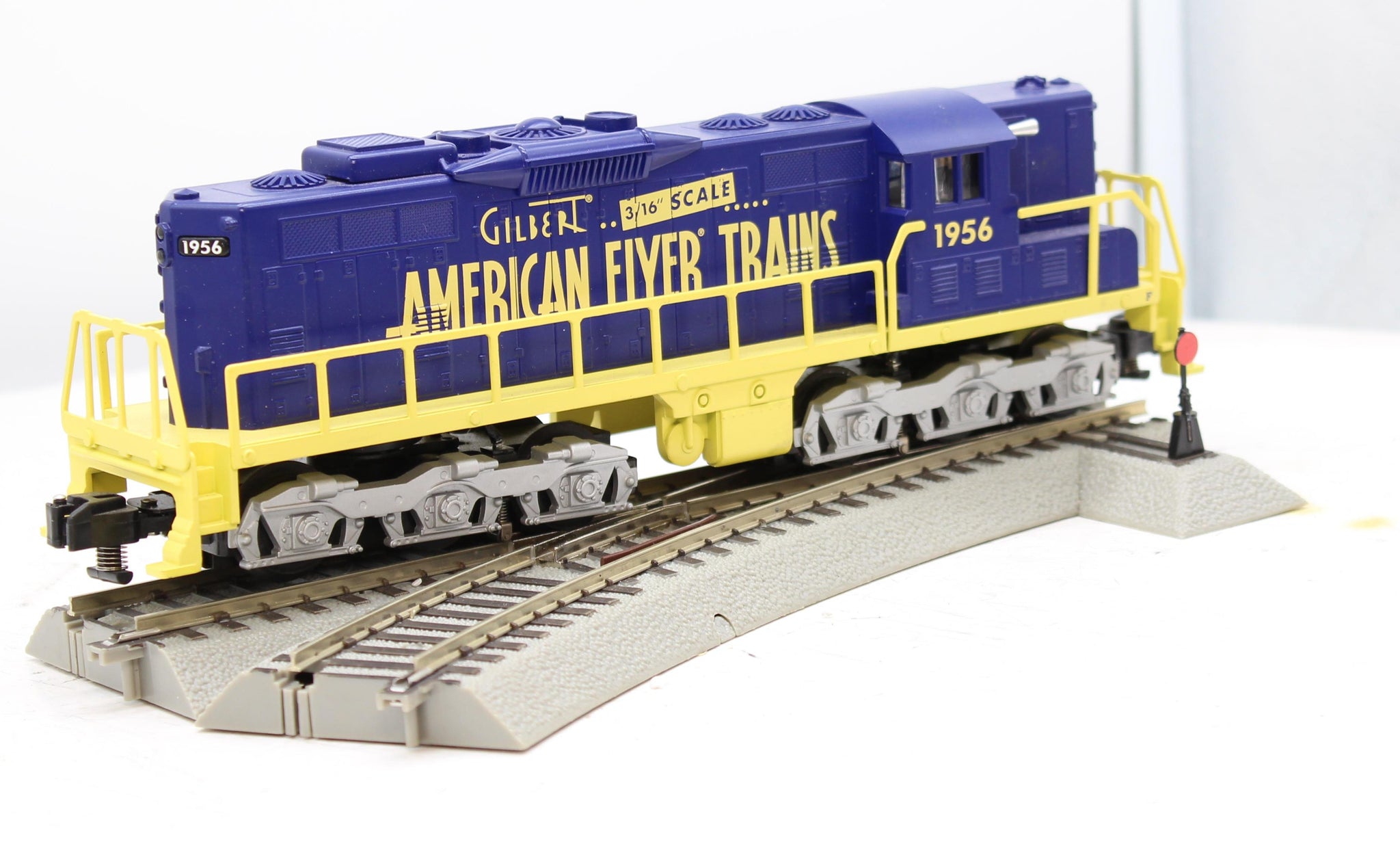
S scale became especially well known through American Flyer trains. The American Flyer name dates back to the early twentieth century, and the company’s post-war trains helped establish S gauge as a popular alternative to larger toy trains. Many of these models ran on three-rail track, making them practical for home layouts and family use.
Alongside the toy-train tradition, enthusiasts developed more scale-focused S gauge railways. These often use two-rail track and aim for a closer resemblance to full-sized railways, from the wheel profiles and trackwork to the locomotives, rolling stock and scenery.
Two-Rail and Three-Rail Systems
S gauge is available in both two-rail and three-rail forms. Three-rail systems use an additional centre rail, a familiar feature of many traditional toy trains. They are valued for their reliability and their connection to classic American Flyer equipment.
Two-rail systems use only the two running rails and are generally chosen by modellers seeking a more realistic appearance. They may require more attention to track wiring, locomotive compatibility and wheel standards. Before buying equipment, it is wise to check which system a model is designed for: two-rail and three-rail products are not automatically interchangeable.
Why Choose S Gauge?
- A useful middle size: S scale is larger than HO scale, so models can show more detail, but it needs less room than larger scales such as O.
- Room for scenery: Its proportions make it possible to build convincing landscapes, stations and structures without every feature dominating the layout.
- A distinctive character: S gauge has a strong heritage and a dedicated community, particularly among enthusiasts of American railways.
- Scope for different approaches: Modellers can choose classic toy trains, scale-style two-rail equipment, or a layout that combines their interests.
Planning an S Gauge Layout
Start by deciding what sort of railway you would like to run. A compact switching layout, a continuous circuit, a passenger railway or a representation of a particular place and period will each call for a different plan. Measure the available space and allow room to reach the track for cleaning and maintenance.
Track, locomotives and rolling stock should be selected as a compatible system. Check the track type, electrical requirements, couplings and wheel standards before adding to a collection. If possible, visit a model railway exhibition or club to see S gauge equipment in operation and speak with experienced modellers.
Getting Started
For a first S gauge project, a straightforward plan and a small collection of compatible equipment are often the best starting point. A locomotive, a few vehicles, a reliable controller and a simple track plan can provide plenty of operating enjoyment. Scenery and extra detail can be added gradually as skills and interests develop.
Whether its appeal lies in nostalgic American Flyer trains or carefully detailed scale modelling, S gauge offers plenty of room for creativity. Its combination of manageable size, history and visual presence makes it a rewarding choice for both new enthusiasts and experienced railway modellers.
Understanding S Gauge Trains: Key FAQs for Enthusiasts
- What is S gauge, and how does it differ from S scale?
- What scale ratio are S gauge trains?
- How wide is standard S gauge track?
- What is the difference between two-rail and three-rail S gauge trains?
- Are S gauge trains compatible with American Flyer track and equipment?
- How much space do I need for an S gauge model railway?
What is S gauge, and how does it differ from S scale?
S scale describes the size of the model: a 1:64 model is 64 times smaller than the real object. S gauge refers to the distance between the rails; standard S gauge track is 7/8 of an inch (about 22.2 mm) apart. The terms are often used interchangeably, but they mean different things: scale is the model’s proportion, while gauge is the track width.
What scale ratio are S gauge trains?
S gauge trains are built to a scale ratio of 1:64, meaning that 1 unit on the model represents 64 of the same units on the full-sized railway. The term “S gauge” refers to the track width, which is approximately 22.4 mm (7/8 inch), while “S scale” describes the models’ size.
How wide is standard S gauge track?
Standard S gauge track is approximately ⅞ inch (22.4 mm) wide, measured between the inside faces of the rails. This corresponds to the 1:64 scale used for S scale models.
What is the difference between two-rail and three-rail S gauge trains?
The main difference is the track and how power reaches the train. Two-rail S gauge trains draw power through the two running rails and are often chosen for a more realistic track appearance. Three-rail trains use an additional centre rail, with the outer rails typically carrying the other electrical connection; this system is associated with classic American Flyer models and can offer dependable operation. The systems are not automatically compatible, so check that the train, track and controller are designed to work together.
Are S gauge trains compatible with American Flyer track and equipment?
Generally, yes: American Flyer S gauge trains are designed to run on S gauge track, and many S gauge locomotives and cars can use American Flyer track. Compatibility with other equipment can vary, though, so check the track gauge, electrical system, wheel standards and couplers before mixing brands or eras. Older American Flyer models may also have specific power or operating requirements, so consult the manufacturer’s guidance or a specialist if you are unsure.
How much space do I need for an S gauge model railway?
The space you need for an S gauge model railway depends on the track plan, curve radius and type of trains you want to run. A simple oval may fit on a board around 4 × 6 ft (1.2 × 1.8 m), while a compact shunting layout can be narrower; longer trains and broad, realistic curves need more room. Check the minimum curve requirements for your locomotives and rolling stock, and leave enough space around the layout to reach the track for cleaning and maintenance.