
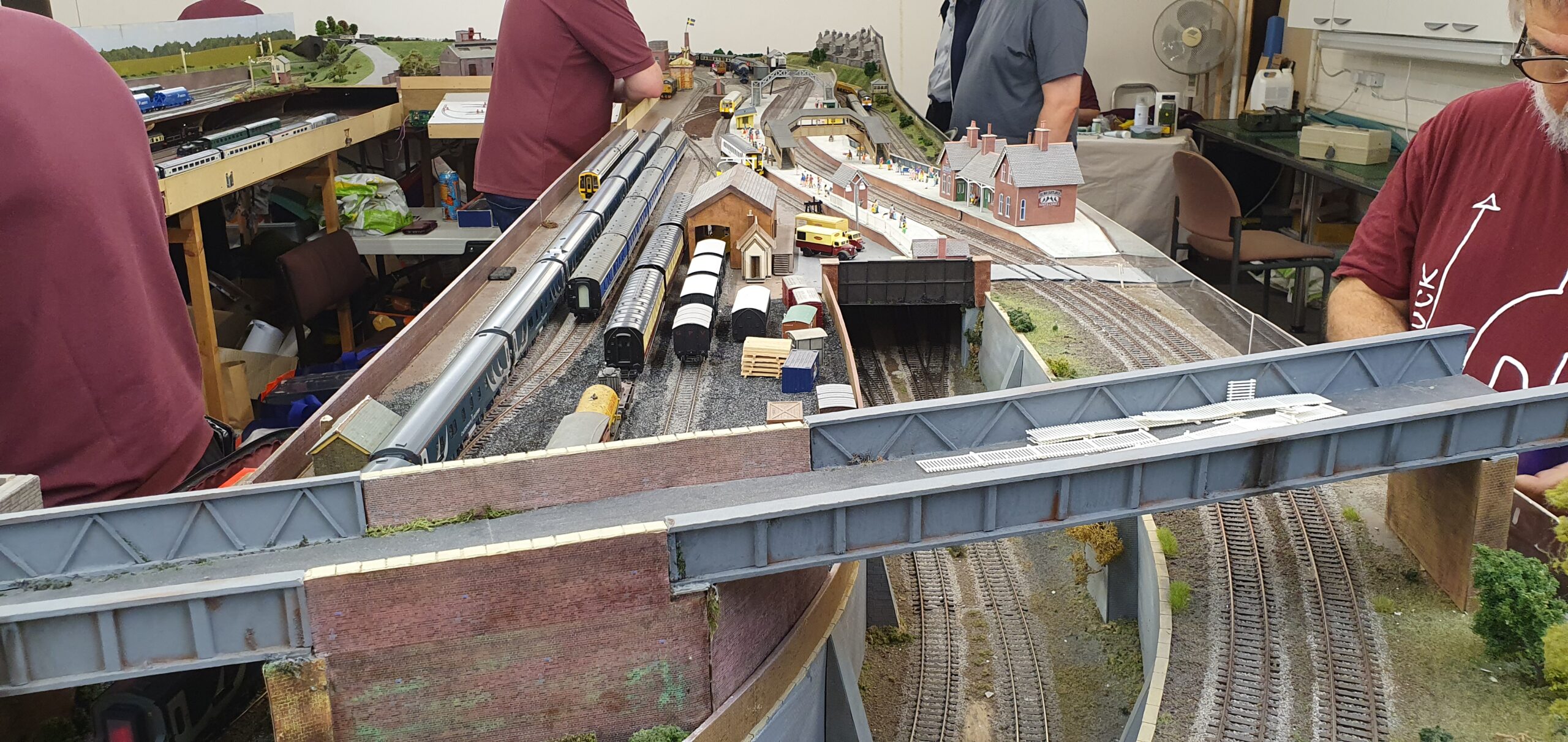
00 Model Railways: A Guide to Britain’s Favourite Model Train Scale
For many railway enthusiasts, the sight of a miniature train winding through a carefully crafted landscape is hard to resist. In the UK, one of the most popular ways to enjoy the hobby is through a 00 model railway. Combining compact dimensions with a wide choice of trains, track and scenery, 00 scale makes it possible to create everything from a small shunting yard to an expansive main-line layout.
What does 00 mean?
00 gauge models are built to a scale of 1:76.2, so a full-size railway feature is represented at roughly one seventy-sixth of its real dimensions. The track gauge—the distance between the rails—is 16.5 mm. This is the same track gauge used by HO models, which are generally made to a smaller scale of 1:87.
The difference between the scale and track gauge means that 00 track is slightly narrower in proportion than standard-gauge railway track. This is a long-established compromise that allows reasonably detailed trains to run on track that fits more easily into homes. For most modellers, the broad range of available models and accessories makes 00 a practical and appealing choice.
Why choose 00 scale?
One of 00’s greatest strengths is its availability. British outline locomotives, coaches and wagons can be found from many manufacturers, covering a wide range of railway companies and eras. Track, buildings, scenery materials and electrical equipment are also widely available, making it straightforward to find parts for a new layout or expand an existing one.
Its size offers a useful balance. A model railway can include recognisable trains and detailed scenery without needing an entire room. A simple end-to-end layout may fit on a shelf or board, while a larger space can accommodate continuous running, stations, sidings and more complex track arrangements.
Planning a 00 model railway
Before buying track, consider what kind of railway you would like to create. A small branch line, busy city station, rural goods yard or fictional main-line junction will each call for a different track plan and selection of trains. Choosing a particular period or location can help bring the layout together, though there is no rule against mixing eras if that is what you enjoy.
Measure the available space carefully and allow room to reach the track for cleaning and repairs. It is also worth thinking about how the layout will be stored or moved. A compact, well-planned design can be more satisfying to operate than a larger layout that is difficult to access.
Track, trains and control
Most beginners start with a train set, which usually includes a locomotive, rolling stock, track and a controller. A set provides the essentials for getting trains running, and additional track or models can be added over time. When expanding, check that new track is compatible with the existing system and that the layout has enough electrical power for its trains and accessories.
Traditional analogue control varies the power supplied to the track to control a locomotive. Digital Command Control, commonly known as DCC, sends commands to small decoders fitted inside locomotives. This allows several trains to operate independently on the same powered track, as well as offering features such as controllable lights and sound. Both systems have their advantages, so the best choice depends on the layout and the way it will be operated.
Bringing the scene to life
Scenery is an important part of the appeal of a model railway. Buildings, platforms, signals, roads and vegetation help establish a sense of place, while details such as fences, signs and figures give the scene character. Starting with a simple landscape and adding detail gradually can make the project easier to manage.
Realistic operation can be just as rewarding as building scenery. Trains can follow a timetable, collect and deliver goods, stop at stations or carry out shunting movements. Even a small layout can offer plenty of variety when its track plan gives trains a clear purpose.
A hobby to enjoy at every level
00 model railways can be as straightforward or as ambitious as their owners choose. Some people enjoy running a train around a simple loop; others take pleasure in detailed construction, realistic operations or collecting models from a particular railway era. The hobby also offers opportunities to learn about railways, electronics, painting and landscape design.
Whether starting with a basic train set or planning a more elaborate layout, 00 scale provides a flexible way to explore the world of model railways. With a little planning and plenty of room for imagination, a modest stretch of track can become a miniature railway with a story of its own.
8 Benefits of OO Gauge Model Railways
- Wide choice of British trains and accessories.
- Compact enough for many homes.
- Easy to find track and spare parts.
- Suitable for beginners and experienced modellers.
- Offers detailed, realistic-looking models.
- Layouts can grow gradually over time.
- Supports both analogue and digital control.
- Combines creativity, engineering and railway history.
Disadvantages of OO Gauge Model Railways
- Can take up considerable space.
- Track is narrow compared with the model scale.
- Detailed layouts can be expensive.
- Small parts can be fiddly to handle.
Wide choice of British trains and accessories.
One of the biggest advantages of 00 model railways is the wide choice of British trains and accessories. Modellers can find locomotives, coaches and wagons from different railway companies and eras, alongside compatible track, buildings, signals and scenery. This makes it easier to recreate a favourite station or railway period, build a layout gradually, and find suitable additions as the project grows.
Compact enough for many homes.
One of the main advantages of a 00 model railway is that it is compact enough to suit many homes. Its track and trains are large enough to show plenty of detail, yet a layout can often be built on a table, shelf or modest baseboard. This makes it easier to enjoy the hobby without needing a dedicated railway room, and a carefully planned design can still offer varied scenery and engaging train operations.
Easy to find track and spare parts.
One of the advantages of a 00 model railway is how easy it is to find track and spare parts. As 00 is widely used in the UK, many shops and online retailers stock compatible rails, points, connectors and replacement components. This makes it simpler to repair a layout, replace worn or damaged parts, or add new sections as the railway grows—without having to search far for suitable supplies.
Suitable for beginners and experienced modellers.
00 model railways are suitable for beginners and experienced modellers alike. Newcomers can get started with a ready-to-run train set and build their skills gradually, while the wide choice of locomotives, track, scenery and accessories gives seasoned enthusiasts plenty of scope for detailed layouts and realistic operation. This flexibility makes 00 a rewarding scale at every stage of the hobby.
Offers detailed, realistic-looking models.
One of the great advantages of 00 model railways is the level of detail they can offer. At a scale of 1:76.2, locomotives, carriages and wagons are large enough to feature realistic lettering, fittings and fine exterior details, helping them closely resemble their full-sized counterparts. Combined with carefully modelled buildings, track and scenery, these trains can bring a convincing miniature railway to life.
Layouts can grow gradually over time.
One of the great advantages of a 00 model railway is that it can grow gradually over time. Starting with a simple track plan and a few trains, you can add extra track, buildings, scenery and rolling stock as your space, budget and interests allow. This makes the hobby easy to begin and gives you the freedom to develop your layout at your own pace, turning a small railway into a more detailed and ambitious scene piece by piece.
Supports both analogue and digital control.
A key advantage of a 00 model railway is that it supports both analogue and digital control, giving you flexibility in how you operate your trains. Analogue control is a straightforward choice for running one locomotive at a time, while Digital Command Control (DCC) lets you control several locomotives independently on the same track. This makes 00 suitable for beginners and experienced modellers alike, and means you can choose the system that best fits your layout, budget and ambitions.
Combines creativity, engineering and railway history.
A 00 model railway brings together creativity, engineering and railway history in one rewarding hobby. Modellers can design landscapes and build detailed scenery, while learning practical skills such as wiring, track planning and locomotive maintenance. Recreating real trains, stations and routes also offers a chance to explore the stories and changing technology of Britain’s railways.
Can take up considerable space.
One drawback of a 00 model railway is the space it can require. Although smaller than a full-size railway, the trains, track and scenery need room to look convincing and operate reliably. A layout with long trains, broad curves or several stations may take up a substantial area, which can be challenging in a smaller home. Careful planning can help make the most of the space available, but it may mean opting for a compact track plan or building the railway in sections.
Track is narrow compared with the model scale.
One drawback of 00 model railways is that the track is narrower than it should be for the scale of the trains. This can make wheels and track look slightly out of proportion, particularly to keen observers or when viewing models close up. For many modellers, it is a worthwhile compromise: the narrower gauge helps keep layouts compact and allows 00 trains to run on readily available track.
Detailed layouts can be expensive.
Detailed 00 model railway layouts can become expensive, particularly when you factor in locomotives, rolling stock, track, scenery, buildings and control equipment. The costs can rise further if you want realistic details, digital operation or a large collection of trains. Planning a budget and building the layout gradually can help keep spending manageable without taking away from the enjoyment of the hobby.
Small parts can be fiddly to handle.
Small parts can be fiddly to handle, particularly when fitting tiny handrails, couplings or trackside details. These pieces can be difficult to grip and position accurately, especially for beginners or anyone with limited dexterity. Good lighting, fine tweezers and a little patience can make the work easier, but delicate components may still be frustrating to assemble—and easy to lose.