
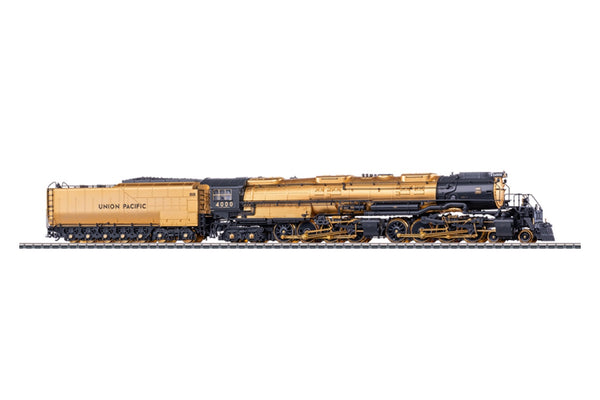
HO Trains: A Guide to the World’s Most Popular Model Railway Scale
HO trains bring the detail and character of the railways into a compact, manageable space. Popular with beginners and experienced railway modellers alike, HO offers a wide choice of locomotives, rolling stock, track and scenery, making it a versatile scale for creating everything from a small branch line to a busy main-line layout.
What Does HO Mean?
HO is a model railway scale of 1:87. This means that a model is approximately one eighty-seventh the size of the real railway subject it represents. The name comes from “half O”, as HO is roughly half the size of O scale.
Standard HO track has a gauge of 16.5 millimetres. Gauge is the distance between the rails. Although HO is widely used in Europe and North America, railway modellers in the UK often choose OO gauge. OO models are made to a larger scale of 1:76 but run on the same 16.5-millimetre track gauge. The two scales are similar, but their trains and scenery are not exactly the same size.
Why Choose HO?
One of HO’s main advantages is the balance between detail and space. Its models are large enough to show features such as cab interiors, lettering and locomotive fittings, yet small enough to create a substantial railway in a spare room, garage or dedicated modelling space.
HO also has an extensive range of products. Modellers can find trains from many countries and periods, along with track, buildings, figures and scenic materials. This makes it easier to build a layout around a particular railway, era or style—or simply to run favourite trains together.
Getting Started with HO Trains
A starter set can be a practical way to begin. Many sets include a locomotive, a selection of wagons or coaches, track and a power supply. Before buying, consider the space available and the kind of railway you would like to create. A simple oval is good for running trains, while a small station, yard or branch line can add operational interest.
Track planning is worth considering early. Curves that are too tight can look unrealistic and may not suit longer locomotives or passenger coaches. A larger layout can accommodate broader curves, but even a compact plan can be made more engaging with sidings, scenery and thoughtful operation.
Power and Control
Traditional HO trains use direct current (DC), with the controller regulating the power supplied to the track. Many modern models can also be fitted with Digital Command Control (DCC). DCC sends control signals through the rails, allowing operators to control individual locomotives independently and, where fitted, operate functions such as lights and sound.
When choosing equipment, check that the locomotive, controller and track are compatible. DCC can add flexibility, particularly on larger layouts, but a simple DC system may be a straightforward place to start.
Building a Realistic Layout
Scenery helps turn a train set into a convincing railway scene. Basic materials such as card, foam, plaster, model foliage and ballast can be used to create hills, embankments, fields and station platforms. Buildings and trackside details give the layout a sense of place, while careful weathering can make trains and structures look as though they have seen years of service.
It is often best to develop a layout in stages. Begin with reliable track and electrical connections, then add scenery and detail over time. Testing trains regularly helps identify problems before they become difficult to reach.
A Hobby with Room to Grow
HO trains offer a rewarding mix of engineering, creativity and railway history. Whether the aim is to build a carefully researched historic scene or simply enjoy watching trains circle a compact layout, HO provides plenty of ways to get involved. With a plan, a little patience and a willingness to experiment, a modest beginning can grow into a railway that is both personal and engaging.
HO Scale Trains: Scale Ratios, Value, Availability and Comparisons with N and OO Gauges
- Which is better, HO or N scale trains?
- What is the HO scale ratio?
- Are old HO trains worth anything?
- What is the difference between 00 and h0?
- Do they still make HO scale trains?
Which is better, HO or N scale trains?
Neither HO nor N scale is universally better; the right choice depends on your space, eyesight and modelling goals. HO trains are larger, so they tend to show more detail and can be easier to handle, making them a popular choice for beginners. N scale trains are smaller, allowing you to fit longer routes, broader landscapes or more complex track plans into the same area. Consider how much room you have, which models are available for your preferred era or region, and which scale you’ll most enjoy building and operating.
What is the HO scale ratio?
The HO scale ratio is 1:87, meaning that one unit on an HO model represents 87 of the same units on the real railway. For example, a model locomotive measuring 20 centimetres long represents a real locomotive about 17.4 metres long. HO trains typically run on track with a gauge of 16.5 millimetres.
Are old HO trains worth anything?
Old HO trains can be worth anything from very little to a considerable sum, depending on their manufacturer, age, rarity, condition and whether the original packaging is included. Common, well-used models may have modest resale value, while scarce or sought-after locomotives and complete sets can attract collectors. Check recent completed sales for comparable items rather than relying on asking prices, and look for missing parts, damage or signs of repairs. A model’s age alone does not guarantee that it is valuable.
What is the difference between 00 and h0?
The main difference is scale: H0 (also written HO) is built to a scale of 1:87, while British 00 gauge models are usually 1:76. Both run on track with a 16.5 mm gauge, so they can use the same track, but 00 trains are larger than H0 trains and the two scales may look mismatched when used together. “H0” and “HO” refer to the same scale; the spelling varies by region.
Do they still make HO scale trains?
Yes, HO scale trains are still made and remain one of the most popular model railway scales worldwide. Manufacturers continue to produce locomotives, coaches, wagons, track, controllers and accessories, with options covering a wide range of railway companies and eras. New models are released regularly, and HO trains are available from specialist model shops and online retailers.