
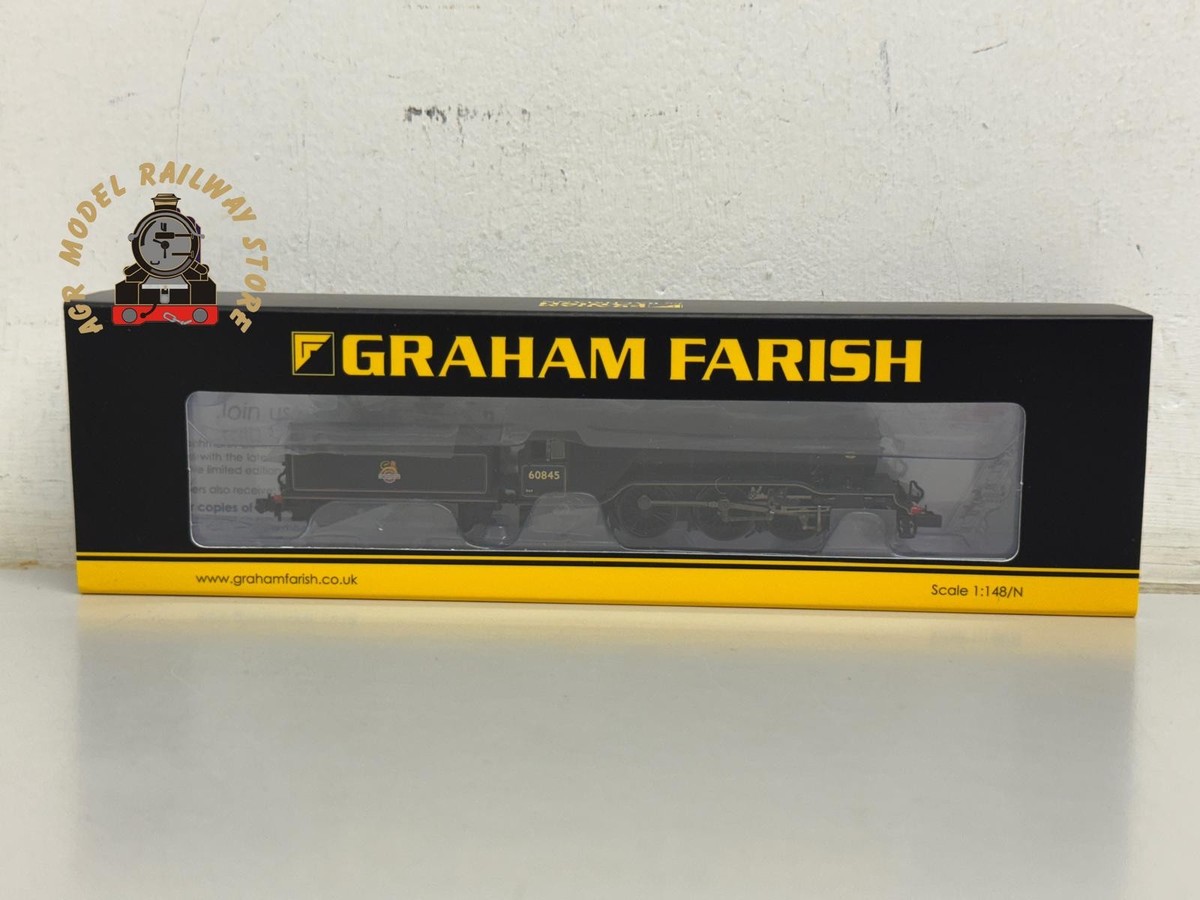
Graham Farish N Gauge Steam Locomotives
Graham Farish is one of the best-known names in British N gauge model railways. Its steam locomotives bring the character of Britain’s railway heritage to a compact scale, making it possible to recreate busy main lines, rural branch routes and historic railway scenes without needing a large layout.
What is N gauge?
British N gauge models are generally made to a scale of 1:148 and run on track with a gauge of 9 mm. The small scale allows a surprising amount of railway to fit into a limited space. A model railway can include stations, yards and scenic countryside while still being practical for a home or club room.
That compact size also presents a challenge: locomotives must be carefully engineered to run smoothly and capture the distinctive shapes of their full-sized counterparts. Graham Farish steam models are designed for N gauge layouts, with details and operating features that vary between models and production generations.
A range of British steam-era subjects
Graham Farish steam locomotives represent a variety of British railway types, from smaller engines suited to local services to larger locomotives associated with express and heavy freight workings. Depending on the model and release, the range may include engines from different railway companies and periods, as well as locomotives in post-nationalisation British Railways liveries.
For railway enthusiasts, the choice of locomotive can help establish the character of a layout. A tank engine is a natural fit for a branch line or industrial scene, while a larger tender locomotive can take centre stage on a main-line train. Checking the prototype, era and livery is important when selecting a model, particularly if historical accuracy is a priority.
Detail in a compact scale
Despite their small size, N gauge steam locomotives can feature recognisable cab, boiler and tender profiles, along with separately fitted or finely moulded details. The level of finish can differ between models, so it is worth looking at the specifications and photographs for the particular locomotive you are considering.
Many models are supplied ready to run, although some may require the fitting of small accessories or adjustments before use. Locomotives from different production periods can also vary in their detailing, mechanisms and packaging. For collectors and layout builders alike, the exact model reference is a useful way to identify the version.
Running and maintenance
Small locomotives benefit from clean track and careful handling. Dust, dirt or residue can affect electrical contact, while a layout with tight curves or uneven track may cause problems for some models. Before buying, check the manufacturer’s guidance on minimum curve radius and make sure the locomotive is suitable for the layout.
Regular, gentle maintenance can help keep a model running reliably. Follow the instructions supplied with the locomotive, and avoid applying oil or dismantling the mechanism unless the guidance recommends it. If a model is being purchased second-hand, ask about its running condition and check that its wheels, couplings and delicate fittings are intact.
Analogue and digital control
Some Graham Farish locomotives can be fitted with a digital decoder for DCC operation, while others may be sold with a decoder already installed or may not be straightforward to convert. Compatibility depends on the specific model and its circuit-board arrangement. Always check the product details or consult a specialist before purchasing a decoder or attempting a conversion.
Choosing the right locomotive
When comparing Graham Farish N gauge steam locomotives, consider the period and railway company you want to represent, the type of service the engine will operate, and the curves and control system on your layout. It is also sensible to compare the model’s condition, included accessories and availability of replacement parts.
Whether it is hauling a short local train or leading an express across a carefully built landscape, a Graham Farish steam locomotive can add movement and character to an N gauge railway. Its compact size makes it especially appealing to modellers who want to recreate the atmosphere of Britain’s steam era in a limited space.
Exploring Graham Farish N Gauge Steam Locomotives: Origins, Scale, Quality, and Top Manufacturers
- Where are Graham Farish model trains made?
- What scale are Graham Farish model trains?
- Are Graham Farish trains any good?
- Who makes the best N gauge locomotives?
Where are Graham Farish model trains made?
Graham Farish model trains, including its N gauge steam locomotives, are generally manufactured in China for Bachmann Europe, which is based in the UK. Production location can vary between models and releases, so check the packaging or product information for details about a particular locomotive.
What scale are Graham Farish model trains?
Graham Farish model trains are made in British N gauge, which is generally to a scale of 1:148. They run on track with a gauge of 9 mm, allowing detailed locomotives and railway scenes to fit into a relatively small space. Some products may be designed for other scales, so check the individual model’s specifications before buying.
Are Graham Farish trains any good?
Graham Farish trains are generally well regarded by N gauge modellers for their range of British prototypes, fine detail and compact, ready-to-run designs. Running quality can vary between models and production generations, so it is worth checking reviews of the specific locomotive you’re considering and ensuring your track is clean and laid smoothly. With suitable care and maintenance, a Graham Farish steam locomotive can be a rewarding choice for both a new layout and an established collection.
Who makes the best N gauge locomotives?
There is no single maker that makes the “best” N gauge locomotives for everyone: it depends on the prototype, level of detail, running performance, budget and availability you value most. For British steam models, Graham Farish and Dapol are the leading names, with both offering well-regarded locomotives and particular models varying in detail and performance. Check reviews of the specific model you are considering, as well as its suitability for your layout and preferred era.