
DCC Train Sets: A Beginner’s Guide
A DCC train set is a model railway starter set that uses Digital Command Control (DCC) to operate trains. Unlike a traditional analogue layout, where the controller changes the power supplied to the track, DCC sends digital commands through the rails. This lets you control fitted locomotives independently, even when they are running on the same track.
What is included in a DCC train set?
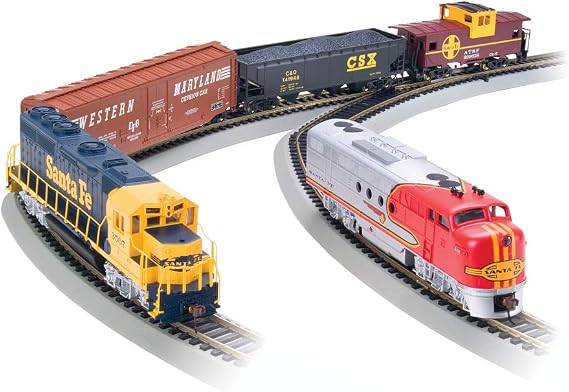
A typical set may include a locomotive fitted with a DCC decoder, a selection of track, a digital controller and a power supply. It will often come with rolling stock, such as coaches or wagons, too. The exact contents vary, so check the product details before buying. Some sets are ready to run straight from the box, while others may need extra track or accessories to create a larger layout.
How does DCC work?
Each DCC-equipped locomotive has a decoder that receives instructions from the controller. The decoder can respond to commands such as start, stop, change direction and adjust speed. Depending on the locomotive and system, you may also be able to operate lights or sound effects.
Every decoder has an address, which allows the controller to select a particular locomotive. This means several trains can share the same powered track while being controlled separately. With an analogue railway, trains on the same electrical section generally respond to the same controller.
Why choose a DCC train set?
- Independent control: Run and manage multiple DCC locomotives on the same track.
- More realistic operation: Make trains accelerate and slow down smoothly, and control direction and functions from one handset.
- Room to expand: Many DCC systems can be used with additional locomotives, track and compatible accessories.
- Extra features: Suitable locomotives may offer controllable lighting, sound and other functions.
Choosing the right set
Start by choosing a scale and track gauge that suit the space available. Popular options include OO gauge, which is widely used in the UK, and N gauge, which allows a more extensive railway in a smaller area. Check that the set’s track system and DCC equipment are compatible with any products you plan to add later.
Think about what you want to model, too. A set might feature a modern passenger train, a steam locomotive or a freight service. Choose one that appeals to you, and consider whether replacement parts and additional locomotives are easy to find.
Finally, compare the controller’s features. A simple system can be a good introduction, while a more advanced controller may offer additional locomotive capacity or functions. Make sure the set provides the essentials you need to get started.
Setting up your DCC railway
Begin by assembling the track on a flat, stable surface and connecting it according to the instructions. Check that the rail joints are secure and that the track forms a complete circuit. Connect the DCC controller and power supply as directed by the manufacturer, then place the locomotive on the rails and select its address.
If the locomotive does not respond, check the power connections, track joints and controller settings. Keep the rails and locomotive wheels clean, as dirt can interfere with electrical contact. Always follow the manufacturer’s guidance when connecting equipment, and use only the specified power supply.
Is DCC right for you?
DCC can be an excellent choice if you want to operate several trains independently or enjoy features such as sound and lighting control. It may involve a higher initial cost than a basic analogue set, and locomotives need compatible decoders to use DCC functions. However, a starter set offers a straightforward way to explore digital control and build a railway that can grow with your interests.
Top 5 Advantages of DCC Train Sets: Independent Control, Realism, and Expandability
- Control multiple trains independently.
- Enjoy smooth, realistic operation.
- Operate lights and sound functions.
- Expand your layout over time.
- Easy to get started with a complete set.
Exploring the Challenges of DCC Train Sets: 7 Considerations for Enthusiasts
- Higher initial cost
- Requires DCC-compatible locomotives
- Can be tricky for beginners
- Setup may take longer
- Systems may not all be compatible
- Repairs can be more complex
- Needs clean track for reliable control
Control multiple trains independently.
One of the main advantages of a DCC train set is the ability to control multiple trains independently on the same track. Each locomotive can respond to its own commands, allowing you to adjust its speed and direction without affecting the others. This makes it easier to create realistic, busy railway operations and coordinate several trains on a single layout.
Enjoy smooth, realistic operation.
A DCC train set makes it easy to enjoy smooth, realistic operation. Trains can accelerate and slow down gradually, rather than starting or stopping abruptly, giving each journey a more lifelike feel. You can also control locomotives independently, adjusting their speed and direction with precision as they travel around the layout.
Operate lights and sound functions.
One of the pleasures of a DCC train set is being able to control a locomotive’s lights and sound independently. Depending on the model, you can switch headlights, cab lights or other effects on and off, and enjoy realistic sounds such as whistles, horns and engine noise. These features add atmosphere to your layout and make operating each train feel more engaging.
Expand your layout over time.
A DCC train set makes it easy to expand your layout over time. You can start with a simple oval and gradually add more track, points, sidings and scenery as your space and interests grow. You can also introduce compatible locomotives and control them independently on the same powered track, letting your railway become more varied without having to rebuild it from scratch.
Easy to get started with a complete set.
A DCC train set makes it easy to get started, as it usually includes the essential equipment in one box: a locomotive, track, controller and power supply. With clear instructions and minimal extra purchases needed, you can assemble your first layout and enjoy digital train control without having to choose every component separately.
Higher initial cost
One drawback of a DCC train set is its higher initial cost. Digital controllers and decoder-equipped locomotives are often more expensive than their analogue equivalents, and adding extra trains or accessories can increase the cost further. For beginners on a tight budget, this may make a basic analogue set a more affordable way to get started.
Requires DCC-compatible locomotives
One drawback of a DCC train set is that its advanced controls work only with locomotives fitted with compatible DCC decoders. Older or analogue locomotives may need a decoder installed before they can be used, which can add to the cost and may require technical know-how. Check a locomotive’s compatibility before adding it to your layout.
Can be tricky for beginners
DCC train sets can be tricky for beginners because digital controllers, locomotive addresses and decoder settings may take time to understand. Setting up the system or troubleshooting a locomotive that does not respond can also feel daunting at first. Starting with a straightforward set and following the instructions step by step can make the learning process easier.
Setup may take longer
Setting up a DCC train set can take longer than getting a basic analogue set running. You may need to connect and configure the digital controller, assign addresses to locomotives and learn how to use its controls. The extra setup is worthwhile for many railway enthusiasts, but beginners should allow time to read the instructions and get familiar with the system.
Systems may not all be compatible
One drawback of a DCC train set is that systems and accessories may not all be compatible. Although many products follow common standards, controllers, decoders and extra features can work differently between manufacturers. Before expanding your railway, check that new equipment will work with your existing system to avoid unexpected costs or limited functionality.
Repairs can be more complex
Repairs to a DCC train set can be more complex than those to a basic analogue railway. Faults may involve not only the track or motor but also the locomotive’s decoder, wiring or digital controller, making the cause harder to identify. Some repairs may require specialist knowledge or professional help, which can add to the cost and time needed to get trains running again.
Needs clean track for reliable control
DCC train sets rely on a consistent electrical connection between the track and each locomotive, so dirty rails or wheels can interrupt the digital signal. This may cause a train to hesitate, stop or respond unreliably to the controller. Regularly cleaning the track and locomotive wheels helps keep the railway running smoothly, but it does add a little routine maintenance.