
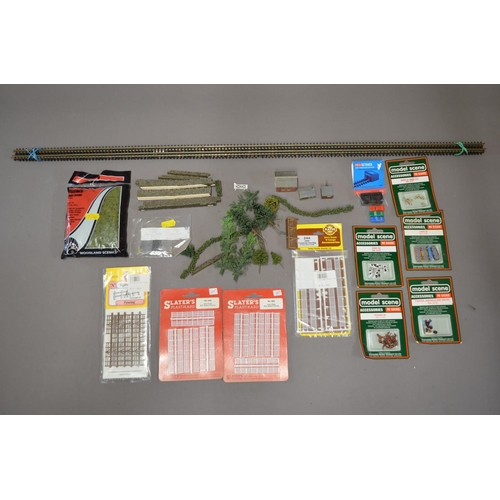
N Gauge Accessories: The Details That Bring a Layout to Life
N gauge is a popular choice for railway modellers who want to create a detailed layout without needing a great deal of space. Its compact trains and track leave room for long main lines, busy stations and varied scenery. The right accessories add character and make a layout feel like a convincing miniature world.
What are N gauge accessories?
N gauge accessories are the scenery, structures and operating details used to complete a model railway. They range from platform benches and signal boxes to trees, road vehicles, people and lineside equipment. Some are ready-made, while others can be assembled, painted or adapted to suit a particular scene.
Scenery and landscape
Ground cover is a good place to start. Static grass, flock, ballast and scenic matting can be used to create fields, gardens, embankments and trackside verges. Trees and hedges help divide a layout into distinct scenes, while rocks, retaining walls and tunnels add depth to a hilly landscape.
Because N gauge models are small, subtle changes in colour and texture can make a big difference. Layering different materials often looks more natural than covering a large area with a single shade or finish.
Buildings and railway details
Stations, goods sheds, houses, shops and industrial buildings help establish the setting of a layout. Choose structures that suit its period and location: a modern station will look out of place beside steam-era rolling stock, unless the layout is intended to show several eras.
Smaller railway accessories can make scenes feel more complete. Platform signs, lamps, signals, fencing, telegraph poles and level-crossing equipment all provide useful finishing touches. A few carefully placed details can be more effective than filling every available space.
People, vehicles and everyday life
Figures and vehicles give a layout a sense of activity. Passengers waiting on a platform, railway staff beside a signal box or a delivery van outside a shop can suggest a story without taking attention away from the trains. Position figures naturally and leave enough space around them so that scenes do not appear overcrowded.
Road vehicles and other models should be chosen with care. Their scale and style need to suit the trains, buildings and period represented. If a layout is based on a particular place, photographs can help guide the choice of colours, signs and street furniture.
Lighting and electrical accessories
Lighting can bring buildings, platforms and streets to life, particularly on an exhibition layout. LEDs are commonly used because they are compact and consume relatively little power. Plan wiring before scenery is finished, and check the requirements of each accessory before connecting it to a power supply or control system.
Other useful electrical accessories include point motors, control switches, signals and uncoupling devices. These can improve operation as well as appearance. Keep wiring organised and label connections to make later maintenance easier.
Choosing accessories for your layout
- Check scale and compatibility: N gauge conventions vary by country. British N gauge models are generally made to 1:148 scale, while many European and North American N scale models use 1:160. Check the product details, especially when mixing ranges.
- Match the setting: Consider the railway’s location, era and character before buying buildings, vehicles or signs.
- Measure your space: Small accessories still need room around them. Check dimensions and allow space for track, platforms and access for maintenance.
- Plan before installing: Test the arrangement of buildings, trees and other scenery before fixing anything permanently.
- Build gradually: Adding a few well-chosen items at a time makes it easier to keep the layout coherent.
Making a convincing miniature world
N gauge accessories offer countless ways to personalise a model railway. From broad landscapes to tiny station details, each addition helps establish the scene and gives viewers more to discover. By choosing items that suit the scale and setting, and placing them with care, even a compact layout can feel rich, busy and believable.
Essential FAQs for Enhancing Your N Gauge Model Railway with Accessories in the UK
- What accessories do I need to get started with an N gauge layout?
- How do I choose the right scale for N gauge buildings and scenery?
- Where can I buy N gauge accessories in the UK?
- Which N gauge accessories are best for making a layout look more realistic?
- Are N gauge accessories compatible between different manufacturers?
- How can I add lighting and electrical accessories to an N gauge layout?
What accessories do I need to get started with an N gauge layout?
To get started with an N gauge layout, you’ll need track, a compatible controller and power supply, plus a locomotive and some rolling stock. A baseboard provides a stable surface, while track ballast, basic scenery and a few buildings can help bring the layout to life. Check that accessories match your models’ scale and the railway era you have in mind, and add details such as signals, people and lighting as your layout develops.
How do I choose the right scale for N gauge buildings and scenery?
When choosing buildings and scenery for an N gauge layout, check the manufacturer’s stated scale rather than relying on the “N gauge” label alone. British N gauge models are typically 1:148, while European and North American N scale items are often 1:160, so mixing ranges can make buildings, people and vehicles look noticeably mismatched. Consider the layout’s setting and the size of your trains, then compare product dimensions or test an item in place before committing. Slight differences can sometimes be disguised by perspective, but keeping accessories broadly consistent will help create a believable scene.
Where can I buy N gauge accessories in the UK?
N gauge accessories are available from specialist model railway shops across the UK, as well as online retailers and manufacturers’ own websites. You can also find them at model railway exhibitions, where it is often possible to compare products in person and get advice from other enthusiasts. Before ordering, check the scale, dimensions and compatibility of each item, particularly if you are combining British N gauge models (typically 1:148) with products made to the international 1:160 scale.
Which N gauge accessories are best for making a layout look more realistic?
For a more realistic N gauge layout, start with accessories that suit its location and era, such as appropriate buildings, signs, signals, fencing and platform furniture. Add varied ground cover, ballast, trees and hedges to give the scenery natural texture, then use a few carefully positioned people and vehicles to suggest everyday activity. Check that accessories match your models’ scale—British N gauge is generally 1:148, while many other N scale ranges use 1:160—and avoid overcrowding: a few well-chosen details often look more convincing than filling every space.
Are N gauge accessories compatible between different manufacturers?
N gauge accessories from different manufacturers are often compatible, but it is worth checking the scale and dimensions before buying. British N gauge is generally modelled at 1:148, while many European and North American N scale ranges use 1:160, so buildings, figures and vehicles may look noticeably different in size when mixed. Track and electrical accessories can also vary in their fittings or specifications. Check product details, compare measurements and, where possible, test items together before adding them to your layout.
How can I add lighting and electrical accessories to an N gauge layout?
Plan the wiring for lights and electrical accessories before fixing scenery in place, and test each item as you add it. LEDs are a popular choice for N gauge buildings, platforms and signals because they are compact, but use the correct resistor or manufacturer-specified power supply and check the accessory’s voltage requirements. Keep lighting and track circuits clearly labelled, secure wires beneath the baseboard, and avoid overloading a controller or power supply. For point motors, signals and other operating accessories, follow the manufacturer’s instructions and leave access for future maintenance.