
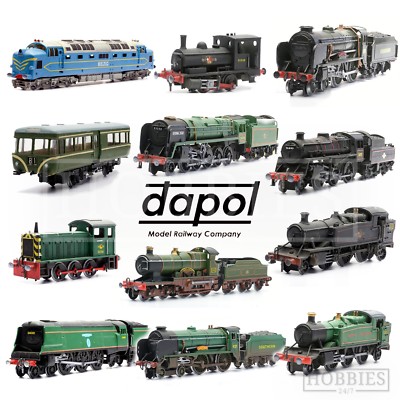
The Fascinating World of HO Gauge Scale Model Trains
HO gauge scale model trains have captured the hearts of enthusiasts worldwide with their perfect balance of detail and size. This popular scale, standing for Half O, offers a great compromise between the smaller N scale and the larger O scale, making it a favourite among hobbyists and collectors.
History and Development
The HO gauge scale was first introduced in the 1930s as an alternative to the larger O gauge. With a ratio of 1:87, HO scale models are approximately half the size of O scale models, allowing for more intricate details without sacrificing space efficiency.
Popularity and Versatility
One of the key reasons for the enduring popularity of HO gauge scale is its versatility. From intricately detailed locomotives to realistic landscapes and buildings, HO scale models offer a wide range of options for creative expression. Additionally, the availability of accessories and rolling stock in HO gauge makes it easy for enthusiasts to expand their collections.
Layout Design and Realism
Creating a layout in HO gauge allows modellers to showcase their creativity and attention to detail. The smaller size of HO scale models enables hobbyists to design intricate landscapes with realistic features such as tunnels, bridges, and stations. The level of realism that can be achieved in an HO layout is truly impressive.
Community and Collaboration
HO gauge enthusiasts often come together to share their passion for model trains through clubs, exhibitions, and online forums. These communities provide opportunities for collaboration, knowledge sharing, and inspiration. Whether you are a beginner or an experienced modeller, there is always something new to learn and explore in the world of HO gauge scale model trains.
Conclusion
The HO gauge scale continues to captivate model train enthusiasts with its perfect blend of detail, realism, and versatility. Whether you are interested in building a small layout at home or creating a sprawling railway empire, HO scale offers endless possibilities for creative expression. Join the vibrant community of HO gauge enthusiasts today and embark on a journey into the fascinating world of model railways.
Understanding HO Gauge Scale: Key Differences and Comparisons with Other Scales
- What is the difference between H0 and 00 gauge?
- Is HO scale better than N scale?
- What is the difference between H0 and 00?
- Which is better, HO or O scale?
- Is a 1/64 scale the same as a HO scale?
- What is the difference between HO gauge and N gauge?
- Is the HO scale the same as 1/64?
What is the difference between H0 and 00 gauge?
When comparing H0 and 00 gauge model trains, the key difference lies in their scale and gauge. H0 (pronounced as “H-zero”) scale models are built to a ratio of 1:87, making them slightly smaller than 00 gauge models, which are built to a ratio of 1:76.2. While both scales are popular choices for model railway enthusiasts, the subtle size variation between H0 and 00 gauge can impact the overall layout design and compatibility with accessories and rolling stock. Understanding these differences is essential for modellers looking to create realistic and accurate representations of railways in their chosen scale.
Is HO scale better than N scale?
When comparing HO scale to N scale, the choice between the two ultimately depends on individual preferences and specific modelling goals. HO scale, with its larger size and greater detail, is often favoured by modellers who appreciate intricate designs and realistic layouts. On the other hand, N scale’s smaller size allows for more extensive layouts in limited spaces and may appeal to those looking to create expansive scenes in a compact setting. Both scales have their own advantages and charm, making it important for enthusiasts to consider factors such as space availability, desired level of detail, and personal preferences when deciding between HO and N scale for their model railway projects.
What is the difference between H0 and 00?
When it comes to the frequently asked question about the difference between H0 and 00 scales in model railways, the key distinction lies in their origins and standards. H0 scale, also known as HO scale, is a popular model railway scale with a ratio of 1:87, making it slightly smaller than 00 scale. On the other hand, 00 scale has a ratio of 1:76.2 and is widely used in the UK. While both scales are close in size and compatibility, subtle variations exist in terms of rolling stock dimensions and track gauge. Understanding these differences can help enthusiasts make informed decisions when selecting models and accessories for their layouts in either H0 or 00 scale.
Which is better, HO or O scale?
When considering whether HO or O scale is better for model train enthusiasts, it ultimately comes down to personal preference and individual priorities. HO scale, with its smaller size and greater detail, is often favoured by modellers looking to create intricate layouts in limited space. On the other hand, O scale offers larger models that can be more visually impressive and easier to handle for those with dexterity issues. Both scales have their own unique appeal, so the decision between HO and O scale depends on factors such as available space, desired level of detail, and personal aesthetic preferences. Ultimately, the “better” scale is the one that best suits the needs and preferences of the modeller.
Is a 1/64 scale the same as a HO scale?
When it comes to model trains, the distinction between a 1/64 scale and an HO scale is essential to understand. While both scales are close in size, they are not the same. A 1/64 scale represents models that are larger than those in the popular HO gauge scale, which has a ratio of 1:87. Therefore, it is crucial for enthusiasts and collectors to be aware of these differences to ensure compatibility with their layouts and accessories. Understanding the nuances between various scales can enhance the overall modelling experience and help enthusiasts make informed decisions when expanding their collections.
What is the difference between HO gauge and N gauge?
When comparing HO gauge and N gauge in the world of model trains, the key difference lies in their respective scales. HO gauge, with a ratio of 1:87, is larger than N gauge, which has a ratio of 1:160. This means that HO scale models are approximately twice the size of N scale models, allowing for more intricate details and realism in the designs. While N gauge is favoured for its space-saving characteristics and ability to create compact layouts, HO gauge offers a balance between detail and size that appeals to many enthusiasts seeking a versatile scale for their model railway projects.
Is the HO scale the same as 1/64?
One common question that arises among model train enthusiasts is whether the HO scale is equivalent to 1/64 scale. While both scales are popular choices for model railways, it is important to note that they are not the same. The HO scale, with a ratio of 1:87, is smaller than the 1/64 scale, which has a ratio of 1:64. This difference in scale size results in distinct differences in the size and proportions of model trains and accessories. Understanding these nuances can help modellers make informed decisions when selecting the appropriate scale for their projects, ensuring accuracy and realism in their layouts.