
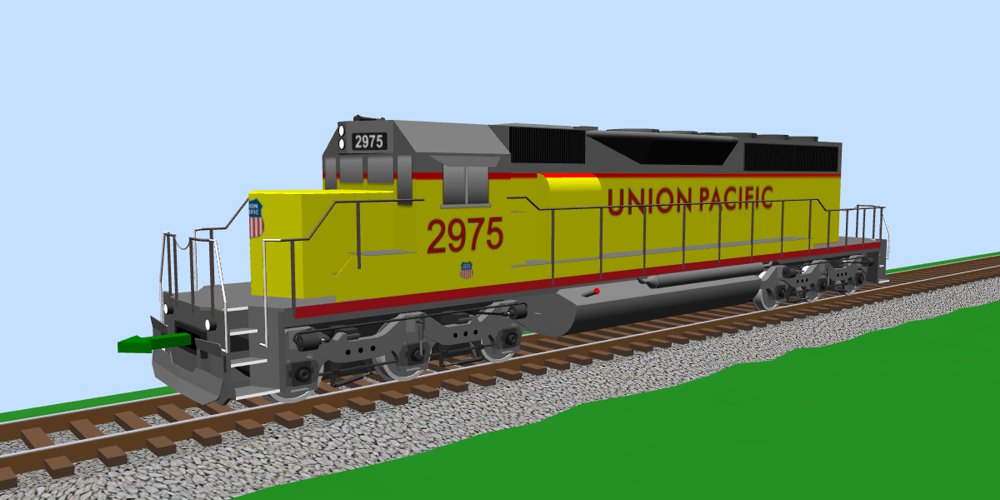
The Union Pacific SD40-2: A Workhorse of the Rails
Since its introduction in the early 1970s, the Union Pacific SD40-2 has been a mainstay of freight railroads across North America. Known for its reliability, power, and versatility, this locomotive has earned a reputation as a true workhorse of the rails.
The SD40-2 is part of EMD’s successful Dash 2 series, featuring a 16-cylinder turbocharged diesel engine that delivers impressive performance. With its distinctive “snoot” nose design and dynamic braking system, the SD40-2 is easily recognisable on tracks from coast to coast.
One of the key strengths of the Union Pacific SD40-2 is its adaptability. Whether hauling heavy coal trains through mountain passes or pulling long strings of intermodal containers across flat prairies, this locomotive excels in a variety of operating conditions.
Over the years, the SD40-2 has undergone various upgrades and refurbishments to ensure it remains competitive in today’s railroading industry. Despite advances in locomotive technology, many railroads still rely on the proven performance and durability of the SD40-2.
With its iconic presence and unmatched reliability, the Union Pacific SD40-2 continues to be a favourite among railfans and railroad operators alike. Whether thundering through rural landscapes or idling in bustling railyards, this locomotive embodies the enduring spirit of American railroading.
Top 8 Advantages of the Union Pacific SD40-2: Reliability, Power, and Iconic Design
- Proven reliability on the rails
- Powerful performance for hauling heavy freight
- Versatile in various operating conditions
- Distinctive and iconic design
- Efficient turbocharged diesel engine
- Effective dynamic braking system
- Ease of maintenance and servicing
- Longevity and durability over years of service
Challenges of the Union Pacific SD40-2: Efficiency, Maintenance, and Technological Limitations
- Limited fuel efficiency compared to newer locomotive models
- Higher maintenance costs due to aging components
- Less advanced technology features than modern locomotives
- Limited speed and acceleration capabilities compared to newer models
- Potential reliability issues due to older design and wear-and-tear
Proven reliability on the rails
The Union Pacific SD40-2 is highly regarded for its proven reliability on the rails, making it a trusted choice for freight operations. With a track record of dependable performance spanning several decades, this locomotive has earned the confidence of railroad operators and maintenance crews alike. Its robust design and engineering ensure that it can withstand the rigours of long-haul journeys and challenging operating conditions, cementing its reputation as a stalwart workhorse that delivers consistent and efficient service day in and day out.
Powerful performance for hauling heavy freight
The Union Pacific SD40-2 is renowned for its powerful performance when it comes to hauling heavy freight along the rails. Equipped with a robust 16-cylinder turbocharged diesel engine, this locomotive effortlessly tackles the challenge of pulling massive loads over long distances. Its exceptional traction and pulling capacity make it a preferred choice for transporting heavy coal trains, long strings of intermodal containers, and other substantial freight shipments. The SD40-2’s ability to deliver consistent and reliable power ensures efficient operations and timely delivery of goods, solidifying its reputation as a formidable workhorse on the tracks.
Versatile in various operating conditions
The Union Pacific SD40-2 stands out for its exceptional versatility in handling a wide range of operating conditions. Whether navigating steep mountain grades, traversing winding tracks, or pulling heavy loads across vast plains, this locomotive demonstrates its adaptability and reliability. Its robust design and powerful performance make it a preferred choice for railroads seeking a dependable workhorse that can excel in diverse environments, showcasing the SD40-2’s ability to tackle varied challenges with ease and efficiency.
Distinctive and iconic design
The distinctive and iconic design of the Union Pacific SD40-2 sets it apart from other locomotives on the rails. With its unique “snoot” nose and bold livery, the SD40-2 is instantly recognisable to rail enthusiasts and casual observers alike. This eye-catching appearance not only adds to the locomotive’s charm but also reflects its long-standing presence in the history of American railroading. The iconic design of the SD40-2 serves as a testament to its enduring legacy and timeless appeal in the world of trains.
Efficient turbocharged diesel engine
The efficient turbocharged diesel engine of the Union Pacific SD40-2 sets it apart as a powerhouse on the rails. This advanced engine technology not only provides superior performance but also enhances fuel efficiency, making the locomotive a cost-effective and environmentally friendly choice for freight operations. With its ability to deliver impressive power while minimising fuel consumption, the turbocharged diesel engine of the SD40-2 ensures that it can tackle long-haul journeys with ease, showcasing its reliability and sustainability in modern rail transportation.
Effective dynamic braking system
The Union Pacific SD40-2 is renowned for its effective dynamic braking system, which enhances its operational efficiency and safety on the rails. This feature allows the locomotive to convert excess kinetic energy into heat, helping to slow down the train without relying solely on traditional friction brakes. The precise control offered by the dynamic braking system not only reduces wear and tear on brake components but also improves overall train handling, particularly when navigating steep grades or descending long slopes. The SD40-2’s reliable dynamic braking capability underscores its status as a versatile and dependable workhorse in the world of freight railroading.
Ease of maintenance and servicing
The Union Pacific SD40-2 is highly regarded for its exceptional ease of maintenance and servicing. With accessible engine components, user-friendly design features, and a straightforward maintenance schedule, this locomotive streamlines the upkeep process for railroad operators. The efficient servicing of the SD40-2 not only reduces downtime but also contributes to its overall reliability and longevity on the rails, making it a preferred choice for many railroads seeking cost-effective and efficient locomotive operations.
Longevity and durability over years of service
The longevity and durability of the Union Pacific SD40-2 have stood the test of time, making it a standout pro of this iconic locomotive. With a history spanning several decades, the SD40-2 has proven its reliability and ruggedness through years of service on the rails. Its robust construction and well-engineered components have enabled it to weather the demands of heavy freight operations, demonstrating a resilience that has endeared it to railroad operators and enthusiasts alike. The ability of the SD40-2 to maintain peak performance over extended periods underscores its reputation as a trusted workhorse that continues to excel in the ever-evolving landscape of rail transportation.
Limited fuel efficiency compared to newer locomotive models
The Union Pacific SD40-2, while renowned for its reliability and power, does have a drawback in terms of fuel efficiency when compared to newer locomotive models. Due to advancements in diesel engine technology and design, modern locomotives are able to achieve greater fuel efficiency, reducing both operational costs and environmental impact. Despite this limitation, the SD40-2’s proven performance and versatility continue to make it a valuable asset for railroads across the country, showcasing a balance between tradition and innovation in the ever-evolving landscape of rail transportation.
Higher maintenance costs due to aging components
The Union Pacific SD40-2 faces a significant drawback in the form of higher maintenance costs attributed to aging components. As this locomotive has been in service for several decades, wear and tear on critical parts such as engines, traction motors, and electrical systems can lead to more frequent repairs and replacements. The challenge of sourcing obsolete or specialised components further adds to the maintenance expenses, making it a costly endeavour to keep these venerable workhorses running smoothly on the rails.
Less advanced technology features than modern locomotives
While the Union Pacific SD40-2 is celebrated for its reliability and robust performance, one of its drawbacks is its comparatively dated technology when compared to modern locomotives. With advancements in digital control systems, fuel efficiency technologies, and onboard diagnostics, newer locomotives offer enhanced operational capabilities and improved efficiency. The SD40-2’s lack of these advanced features may limit its ability to optimise performance and adapt to evolving industry standards. Despite this con, the SD40-2’s enduring popularity highlights the enduring legacy of a classic locomotive design.
Limited speed and acceleration capabilities compared to newer models
The primary drawback of the Union Pacific SD40-2 is its limited speed and acceleration capabilities when compared to newer locomotive models. While the SD40-2 is renowned for its reliability and rugged design, its performance in terms of speed and acceleration may fall short of the expectations set by modern railroading standards. As advancements in locomotive technology have led to the development of faster and more efficient engines, the SD40-2’s comparatively slower speed and acceleration could pose challenges in meeting the demands of today’s fast-paced freight operations.
Potential reliability issues due to older design and wear-and-tear
The Union Pacific SD40-2, despite its esteemed reputation as a workhorse of the rails, faces a notable con in the form of potential reliability issues stemming from its older design and accumulated wear-and-tear over years of service. As with any aging locomotive, components may deteriorate, leading to increased maintenance requirements and the possibility of unexpected breakdowns. While efforts have been made to refurbish and modernise these locomotives, the inherent challenges posed by their vintage design remain a concern for operators seeking optimal efficiency and performance on the rail network.