
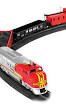
The Fascinating World of HO Scale Trains
HO scale model trains have captured the hearts of enthusiasts worldwide with their perfect balance of size, detail, and realism. As one of the most popular scales in the model railway hobby, HO scale (1:87) offers a wide range of locomotives, rolling stock, and accessories for collectors and hobbyists to enjoy.
A Brief History
The HO scale, which stands for “Half O,” was first introduced in the 1930s as a smaller alternative to the larger O scale. Its compact size made it ideal for creating detailed layouts in limited spaces while still allowing for intricate modelling possibilities.
Scale and Compatibility
HO scale trains are approximately half the size of O scale trains, making them popular among modellers who want to create realistic scenes without requiring a vast amount of space. The scale also allows for a wide variety of locomotives and rolling stock to be produced, ensuring that there is something for every era and theme.
Detailing and Realism
One of the key attractions of HO scale trains is their level of detail. Manufacturers pay close attention to replicating the intricate features of real trains, from accurate paint schemes to finely crafted parts. This dedication to realism enhances the overall aesthetic appeal of HO scale layouts.
Layout Design
HO scale layouts can range from simple oval tracks to complex multi-level designs with realistic scenery and structures. Modellers have the freedom to create customised landscapes, including mountains, rivers, towns, and industrial areas, adding depth and character to their layouts.
Community and Events
Enthusiasts of HO scale trains often come together at exhibitions, club meetings, and online forums to share their passion for model railways. These gatherings provide opportunities to showcase layouts, exchange ideas, and learn new techniques from fellow modellers.
Start Your Journey with HO Scale Trains
Whether you are new to the hobby or a seasoned collector, exploring HO scale trains opens up a world of creativity and enjoyment. With its versatility, realism, and vibrant community, HO scale modelling offers endless possibilities for creating miniature worlds on rails.
Exploring the Benefits of HO Scale Trains: Realism, Variety, and Community Connections
- HO scale trains are highly detailed, capturing the realism of real-life locomotives and rolling stock.
- The compact size of HO scale allows for creating intricate layouts in limited spaces, perfect for modellers with space constraints.
- A wide variety of locomotives, wagons, and accessories are available in HO scale, catering to different eras and themes.
- HO scale is popular among hobbyists due to its affordability compared to larger scales like O or G scale.
- Modelling in HO scale offers a diverse range of scenery possibilities, from mountains and rivers to towns and industrial areas.
- HO scale trains are compatible with a vast selection of track systems and accessories from various manufacturers, providing flexibility in layout design.
- The vibrant community surrounding HO scale trains offers opportunities for enthusiasts to connect, share knowledge, and participate in exhibitions and events.
Challenges of HO Scale Trains: Detail, Dexterity, Cost, and Availability
- Limited detail compared to larger scales like O scale
- Smaller size can be challenging for modellers with dexterity issues
- Higher cost per item due to intricate detailing and manufacturing processes
- Limited availability of certain prototype models in HO scale
HO scale trains are highly detailed, capturing the realism of real-life locomotives and rolling stock.
HO scale trains excel in their exceptional level of detail, meticulously replicating the intricate features of real-life locomotives and rolling stock. From accurate paint schemes to finely crafted parts, these models capture the essence and realism of their full-sized counterparts with remarkable precision. Enthusiasts appreciate the attention to detail in HO scale trains, as it enhances the authenticity of their layouts and adds a touch of realism that brings their miniature worlds to life.
The compact size of HO scale allows for creating intricate layouts in limited spaces, perfect for modellers with space constraints.
The compact size of HO scale trains presents a significant advantage for modellers facing space constraints, as it enables the creation of intricate layouts even in limited areas. This feature allows hobbyists to design detailed scenes, including realistic landscapes and structures, without the need for expansive space. HO scale’s ability to deliver intricate layouts in a small footprint makes it an ideal choice for enthusiasts looking to maximise their modelling potential within confined spaces.
A wide variety of locomotives, wagons, and accessories are available in HO scale, catering to different eras and themes.
In the realm of HO scale trains, a notable advantage lies in the extensive selection of locomotives, wagons, and accessories on offer. This diversity caters to a wide range of preferences, accommodating various eras and themes within the model railway hobby. Whether enthusiasts are drawn to modern diesel engines, vintage steam locomotives, or specific historical periods, the abundance of options in HO scale ensures that every modeller can find the perfect pieces to bring their vision to life on their layout.
HO scale is popular among hobbyists due to its affordability compared to larger scales like O or G scale.
HO scale trains have gained popularity among hobbyists for their affordability when compared to larger scales such as O or G scale. The relatively lower cost of HO scale models and accessories makes it an attractive option for enthusiasts looking to build detailed layouts without breaking the bank. This cost-effective aspect of HO scale modelling allows hobbyists to expand their collections and create intricate railway scenes while staying within budget constraints, making it a preferred choice for many model railway enthusiasts.
Modelling in HO scale offers a diverse range of scenery possibilities, from mountains and rivers to towns and industrial areas.
Modelling in HO scale presents modellers with a diverse range of scenery possibilities, allowing them to create intricate landscapes that include everything from majestic mountains and meandering rivers to bustling towns and detailed industrial areas. The flexibility of HO scale enables enthusiasts to design and build layouts that showcase a variety of terrains and settings, adding depth and realism to their model railway creations.
HO scale trains are compatible with a vast selection of track systems and accessories from various manufacturers, providing flexibility in layout design.
HO scale trains offer a notable advantage in their compatibility with a diverse range of track systems and accessories from different manufacturers. This versatility grants modellers the flexibility to design layouts according to their preferences, incorporating a wide selection of tracks and accessories to create unique and customised railway environments. Whether modellers seek to recreate specific historical scenes or unleash their creativity with imaginative layouts, the compatibility of HO scale trains with various components ensures endless possibilities for layout design.
The vibrant community surrounding HO scale trains offers opportunities for enthusiasts to connect, share knowledge, and participate in exhibitions and events.
The vibrant community associated with HO scale trains provides a welcoming environment for enthusiasts to come together, exchange ideas, and engage in a shared passion for model railways. This sense of camaraderie allows individuals to connect with like-minded hobbyists, share valuable knowledge and expertise, and take part in exciting exhibitions and events that celebrate the artistry and craftsmanship of HO scale modelling.
Limited detail compared to larger scales like O scale
When it comes to the world of model trains, one downside of HO scale trains is their limited detail compared to larger scales such as O scale. Due to their smaller size, HO scale models may not have the same level of intricate detailing and realism as their larger counterparts. This can be a drawback for enthusiasts who value highly detailed and lifelike representations in their model railway layouts. However, despite this limitation, many modellers appreciate the compact nature of HO scale trains and find creative ways to enhance detailing through customisation and craftsmanship.
Smaller size can be challenging for modellers with dexterity issues
The smaller size of HO scale trains, while advantageous for creating detailed layouts in limited spaces, can present challenges for modellers with dexterity issues. Handling tiny parts and intricate details may require a steady hand and precise movements, which can be difficult for individuals with limited fine motor skills. Assembling and maintaining HO scale models may pose a greater level of complexity for modellers facing dexterity challenges, potentially impacting their overall enjoyment of the hobby.
Higher cost per item due to intricate detailing and manufacturing processes
The main drawback of HO scale trains lies in their higher cost per item, attributed to the intricate detailing and complex manufacturing processes involved in their production. The meticulous attention to replicating real-life features and the precision required to achieve a high level of realism contribute to the elevated prices of HO scale locomotives, rolling stock, and accessories. While enthusiasts appreciate the quality and authenticity that come with these detailed models, the increased cost can be a limiting factor for those looking to build extensive layouts or expand their collections within a budget constraint.
Limited availability of certain prototype models in HO scale
The main drawback of HO scale trains lies in the limited availability of certain prototype models within this scale. Due to the smaller size of HO scale compared to larger scales, some niche or less common prototype models may not be as readily produced by manufacturers. This limitation can pose a challenge for modellers who are looking to replicate specific trains or rolling stock that are not widely available in HO scale, requiring them to either modify existing models or explore other scales for greater variety in prototype selection.